Are Portable Washers Allowed in Apartments?
Usually yes, but only if your lease and building rules permit them. A portable washer needs no permanent plumbing change, yet many leases still ban washers outright or limit them to units with a legal hookup.
On this page (8 sections)
- What do most leases say about portable washers in apartments?
- How do building rules differ from the lease?
- When does a portable washer count as a plumbing change?
- How can you check before you buy a portable washer?
- Which portable washers suit an apartment?
- How do you set up a portable washer without breaking the rules?
- What are the risks of running one against the rules?
- So, are portable washers allowed in apartments?
Are portable washers allowed in apartments? Usually yes, but only if your lease and building rules permit them.
A portable washer needs no permanent plumbing change, yet many leases still ban washers outright or limit them to units with a legal hookup.
The machine itself is rarely the problem. The rules around water, noise, and appliances are what decide whether you can keep one in your unit.
What do most leases say about portable washers in apartments?
Many leases name washers and dryers in a list of banned appliances, and a portable unit counts as one. The wording usually covers "washing machines" without carving out small or temporary models.
Read the appliance clause before anything else. Some leases allow a washer only in a designated laundry room or a unit with a washer hookup.
Others require the landlord's written consent for any water-using appliance.
Watch for three phrases in particular. "No washing machines" is a flat ban.
"Washer hookup only" means the unit must connect to plumbing built for it. "With landlord approval" leaves the door open if you ask in writing.
A portable washer that fills from a faucet and drains into a sink is still a washing machine in the eyes of most lease templates. Don't assume the lack of a permanent connection makes it exempt.
Our guide to portable washers and dryers explains how the connection works in practice.
How do building rules differ from the lease?
Building rules sit on top of the lease and can be stricter. A co-op board, condo association, or property manager may add noise, water-damage, or appliance limits that your lease doesn't mention.
Ask the building office, not just the leasing agent. Management often keeps a separate rules packet covering quiet hours, water use, and what counts as a permanent fixture.
A portable washer can trip a rule about appliances that could cause leaks into the unit below.
Rent-controlled and co-op buildings are often the strictest. Boards there may treat any in-unit laundry as a change to the unit, even a wheeled model that unplugs.
Get the answer in writing and keep it with your lease.
If the rules are unclear, ask one direct question: "Can I keep a portable washing machine in my unit?" A written yes protects you far better than a verbal one from a leasing agent who may not know the building's policy.
When does a portable washer count as a plumbing change?
It counts as a change when it's hardwired or permanently connected to water and drain lines. A portable washer that hooks to a faucet with a hose and drains into a sink leaves the plumbing untouched, so most landlords treat it as a movable appliance.
The line blurs in a few spots. A machine that stays connected all the time can look permanent to a building inspector.
A splitter left on the faucet or a hose routed through a cabinet may raise questions about water damage.
Some buildings require a licensed plumber for any new water connection. That rule targets installed washers, but a landlord may apply it broadly to avoid leak risk.
If your lease uses the word "permanent," ask how the building defines it for a wheeled, unplugged unit.
How can you check before you buy a portable washer?
Start with your lease, then the building office, then your renter's insurance. Three short steps save you from buying a machine you have to return or hide.
- Search your lease for "washer," "laundry," "appliance," and "plumbing."
- Email the building manager the exact model you're considering and ask for written approval.
- Call your renter's insurance to ask what a leak in your unit would cover.
Keep the approval email. If a neighbor complains later, a written yes from management settles the question faster than any argument about the machine's size.
Our guide to the best portable washing machine for an apartment covers what to look for once you have the green light. Size, capacity, and noise matter as much as the rules when you share walls with neighbors.
Which portable washers suit an apartment?
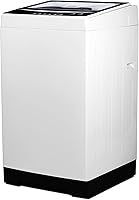
A compact top-load model with wheels and a faucet hookup is the easiest fit for a rented unit. Both COMFEE' models below fill from a standard faucet and drain through a hose, so no plumbing change is needed.
The 0.9 cu ft model measures 18.1 inches wide and 31.5 inches tall, which fits beside a bathroom sink or inside a closet. It has five programs, a stainless steel tub, and a transparent lid so you can watch the cycle.
The auto unbalance detection helps when a load shifts against the tub.
The 1.6 cu ft model holds up to 11 lb of clothes and offers six programs, including a spin-only cycle. Its child lock and delay start help in a shared apartment, and the reloading feature lets you pause to add a forgotten item.
At 79.4 lb, it's heavier to move, so plan a spot where it can stay put.
For drying, the {{product B0C2GPVLHS | A folding dryer that hangs up to 9 garments and runs on a standard outlet, useful when your building bans vented dryers.}} It uses a 600W heating system with two modes and a timer. Its compact size suits a bathroom or closet, though the room needs some ventilation while it runs.
If your machine leaks after setup, see why is my portable washer leaking for the usual causes. A spin dryer can cut drying time when a vented dryer isn't an option; compare models in our guide to the best portable washers with a spin dryer.
How do you set up a portable washer without breaking the rules?
Keep the setup temporary and contained. Fill from a faucet with the included hose, drain into a sink or tub, and unplug the machine when it's not in use.
Place it on a level surface with a drip tray or mat underneath. Secure the drain hose so it can't slip out of the sink during the spin cycle.
A hose that pops loose is the most common cause of water damage in apartments.
Don't leave the machine running when you're out. A cycle that finishes while you're home lets you catch a leak early.
Check the water inlet connection at the faucet before each use, and remove the drain plug before hooking up the drain hose.
Respect quiet hours. Run cycles during the day when neighbors are less likely to complain about motor noise or a spin cycle against a shared wall.
What are the risks of running one against the rules?
The main risks are lease enforcement and water damage. A landlord who finds an unauthorized washer can require you to remove it, and a lease violation can affect your deposit or renewal.
Water damage is the bigger financial risk. If a hose slips and water reaches the unit below, you may be liable for repairs even if your renter's insurance covers your own belongings.
That's why written approval and a contained setup matter more than the machine's price.
Noise complaints are the third risk. A spin cycle in a thin-walled building travels, and a neighbor's report can turn a quiet arrangement into a formal dispute.
Run the machine on a mat, keep loads balanced, and avoid late-night cycles.
So, are portable washers allowed in apartments?
They're allowed when the lease and building rules say so, and they're banned when the paperwork bans washers. The machine's portable design helps you set it up and take it with you, but it doesn't override a no-washer clause.
Read the lease first, get written approval from the building office, and confirm what your renter's insurance covers. If the answer is yes, pick a compact top-loader like the COMFEE' 0.9 cu ft model for a small unit or the 1.6 cu ft model for more capacity.
Add the MOJOCO folding dryer when vented drying isn't an option.
If the answer is no, don't buy first and hope. Ask about a portable unit in writing, and if the building refuses, use a shared laundry room or a wash-and-fold service until your lease changes.
That order of steps keeps the question "are portable washers allowed in apartments" from becoming an expensive mistake.
Frequently asked questions
Do portable washers need a special outlet?
No. They plug into a standard household outlet, though you should avoid sharing that circuit with a microwave or space heater.
A dedicated circuit or a grounded outlet near the sink is the safer setup for a machine that runs a motor and pump.
Will a portable washer damage my apartment floors?
It can if it leaks or vibrates against the floor. Place it on a level surface with a drip tray or mat underneath and keep the drain hose secured in a sink or tub.
A full tub is heavy, so never move the machine while it holds water.
Can I take a portable washer with me when I move out?
Yes. A portable washer is freestanding and connects with hoses, so you unplug it, drain it fully, and wheel or carry it out.
That portability is one reason renters choose them over a permanent install.
What happens if my building bans washers and I use one anyway?
Your landlord can enforce the lease, which may mean a warning, a fine, or a demand to remove the appliance. In some cases a lease violation can affect your deposit or renewal, so get permission in writing before you buy.
Does renters insurance cover a portable washer leak?
It may cover damage to your own belongings, but liability for water damage to the building or a neighbor's unit often falls on you. Ask your insurer what a leaking appliance in your unit would cover before you set one up.
Can I run a portable washer in a bathroom without a utility sink?
Yes. Many renters fill from a shower or sink faucet with the included hose and drain into the tub or a bucket.
A bathroom is often the easiest spot because the floor is water-resistant and a drain is close by.