Portable Dryer vs Regular Dryer: Key Differences (November 2026)
Choose a portable dryer for smaller loads and limited space; choose a regular dryer for larger loads and faster laundry routines. Compare capacity, power needs, venting and installation before deciding.
On this page (10 sections)
- Portable Dryer vs Regular Dryer: Key Differences
- Portable dryer vs regular dryer: what is the main difference?
- How do their capacities compare?
- Which dryer fits a small home or apartment?
- Do portable and regular dryers use different outlets?
- How do drying time and laundry routines compare?
- What setup and venting does each type need?
- Which type is easier to move and store?
- Which portable dryer fits different needs?
- How do you choose between a portable and regular dryer?
Portable Dryer vs Regular Dryer: Key Differences
Choose a portable dryer for smaller loads and limited space; choose a regular dryer for larger loads and faster laundry routines. A portable dryer vs regular dryer comparison comes down to capacity, electrical setup, venting and how often you need to dry laundry.
Portable models can work well when a full-size appliance won't fit or your home lacks a dedicated laundry area. Their smaller loads may mean more cycles for a household that washes several loads each week.
Regular dryers are generally built for larger household loads and permanent installation. Compare the exact model requirements and your room before choosing either type.


Portable dryer vs regular dryer: what is the main difference?
A portable dryer is smaller and easier to place, while a regular dryer usually handles larger loads in a permanent laundry setup. The right choice depends on how much laundry you have and what your room can support.
The portable models here have 3.5 cu ft drums, with stated load volumes around 13.2 lb for BLACK+DECKER and ROVSUN. A regular dryer can offer more room, but capacity and power vary by model.
Portable does not always mean lightweight or effortless to move. These example units weigh about 49.5 to 59 lb, so plan where the dryer will stay and how you'll move it there.
How do their capacities compare?
A regular dryer is the better fit for large weekly loads, while a portable dryer suits smaller batches. Capacity labels help, but the shape and thickness of your laundry also matter.
A compact drum can be enough for daily clothing, towels or a few sheets when you run smaller loads. Bulky bedding can fill the drum quickly and reduce room for items to tumble.
If your laundry routine includes several full baskets at once, calculate how many portable cycles that would require. The added time may outweigh the space saved.
Can a portable dryer handle towels and sheets?
A portable dryer can handle some towels and sheets, but follow the model's capacity limits and the care labels. The BLACK+DECKER product description names sheets and towels among everyday items it can dry.
Large or thick bedding may need more room to tumble. For a bulky comforter, check the dryer manual or use a larger machine if the item cannot move freely.
Which dryer fits a small home or apartment?
A portable dryer often fits a small home more easily because its cabinet is compact and may use a standard 120V outlet. You still need space for airflow, the door swing and exhaust.
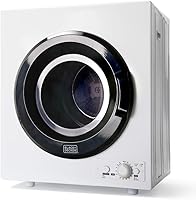
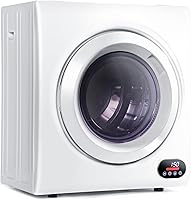
The BLACK+DECKER measures 23.6 x 21.5 x 27.5 inches, while the Euhomy measures 24 x 22.2 x 26.8 inches. Measure the route through doorways and the final spot, including the vent hose.
A regular dryer may need more floor space and a dedicated electrical connection. Before choosing, verify both the appliance dimensions and the installation instructions for your home.
For apartment setup details, see our guide to having a portable dryer in an apartment. You can also compare more models in our best portable dryers guide.
Do portable and regular dryers use different outlets?
Portable dryers in this comparison use 120V power, while regular dryers may have different electrical requirements. Check the exact model and your home's outlet before buying.
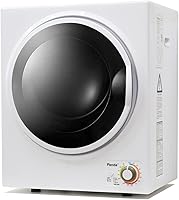
The BLACK+DECKER is rated at 120V and 1500W. ROVSUN is rated at 120V and 1300W, while the Euhomy information describes a 110V dryer.
These examples show why the product name alone isn't enough to confirm compatibility. Read the electrical instructions and avoid adapters or wiring changes that the manufacturer doesn't allow.
Our guide explains whether portable dryers plug into a regular outlet. If you need to estimate running costs, see how much electricity a portable dryer uses.
How do drying time and laundry routines compare?
A regular dryer may finish larger loads in fewer cycles, while a portable dryer can require more time when you split laundry into small batches. Drying times vary by load, fabric and machine.
BLACK+DECKER gives a drying-time range of 30 to 200 minutes. That range is broad, so treat it as a guide for planning rather than a promise for every load.
The Euhomy includes an intelligent mode that adjusts drying time based on humidity. Its maker recommends spin-drying clothes first to improve the drying effect.
If you wash multiple loads in one day, count the dryer cycles as well as the washer cycles. A portable unit can still be convenient when you dry a small amount at a time or can run it between other tasks.
What setup and venting does each type need?
Both types need a safe installation that follows the specific manual, and many portable dryers need an exhaust route. A compact cabinet still needs room around it and a clear vent path.
The BLACK+DECKER includes a 4-inch vent hose and exhaust connector. The other models also describe exhaust or venting, so decide where the warm air will exit before placing the dryer.
A regular dryer may require more involved installation, depending on its power and vent design. Confirm the outlet, vent connection, clearances and any building rules for the exact machine.
Don't block the exhaust or place the dryer where heat and moisture can build up. If your room has no practical vent route, compare models designed for that setup and follow their instructions.
Which type is easier to move and store?
A portable dryer is easier to place in a small room, but its weight can still make moving it a two-person task. Check the dimensions, weight and approved placement options.
The BLACK+DECKER weighs 49.5 lb, Euhomy weighs 55.1 lb and ROVSUN weighs 59 lb. Their compact size helps with placement, but moving one through stairs or a narrow hall still takes planning.
Euhomy can sit on a firm, level surface or be mounted with a bracket, which is not included. ROVSUN describes wall mounting as an option; verify the mounting hardware and wall requirements before installation.
Which portable dryer fits different needs?
Choose a portable model based on its controls, load size and placement needs. These three options share a compact 3.5 cu ft size, so their control features and setup details may help break a tie.
BLACK+DECKER for a small laundry area
The BLACK+DECKER suits a compact laundry area if you want four modes and a standard 120V connection. Its stated load volume is 13.2 lb, and it includes a vent hose and exhaust connector.
Euhomy for mode choices
The Euhomy suits shoppers who want an LCD control panel and four modes, including an intelligent setting that adjusts time based on humidity. Its maker recommends spin-drying clothes first.
ROVSUN for touch controls
The ROVSUN suits shoppers who prefer touch controls for drying modes and temperature levels. Its compact dimensions may fit a small room, but plan for its 59 lb weight and vent route.
How do you choose between a portable and regular dryer?
Pick portable if space and a 120V setup matter most; pick regular if you need larger loads and have room for permanent installation. Use your weekly laundry volume and the exact appliance requirements to make the decision.
A portable model makes sense for one or two people, a small apartment or a secondary laundry area when smaller loads are practical. Measure the room and confirm the vent path and outlet before you buy.
A regular dryer may fit a busy household better if it can dry larger loads with fewer cycles. Check the installation requirements, especially electrical service and venting, before choosing a model.
If you're comparing compact models, use our best compact dryers for apartment living guide. Choose the machine that matches your space and routine, then follow its manual for setup and use.
Frequently asked questions
Is a portable dryer as good as a regular dryer?
A portable dryer can handle everyday laundry in a small home, but it usually has less capacity and may take longer per load than a regular dryer. Check the exact model's load size, power and vent needs, then compare them with how much laundry you dry each week.
Can a portable dryer use a regular outlet?
Some portable dryers use a standard 120V outlet, but check the exact model's electrical instructions and outlet requirements. For example, the BLACK+DECKER and ROVSUN models here are 120V; don't assume every compact dryer has the same plug or power needs.
Do portable dryers need to be vented?
Many portable dryers in this size range use an exhaust hose, so plan where warm, moist air will go before setting one up. Check the model's instructions for vent placement and clearances, and keep the exhaust path unobstructed during use.
Will a portable dryer dry a full-size comforter?
Don't assume a portable dryer can dry a bulky comforter just because it fits inside the drum. Check the care label and the dryer's instructions, and leave room for items to tumble.
Thick bedding may need a larger dryer or a laundromat machine.