Can You Have a Portable Dryer in an Apartment?
Yes, you can have a portable dryer in an apartment if your lease and building rules allow it, you have a suitable outlet, and you can vent it as the instructions require. Measure the space and plan where warm, moist exhaust will go before choosing a model.
On this page (8 sections)
- Can you have a portable dryer in an apartment without hookups?
- What should you check before bringing one home?
- How does apartment venting work?
- Which portable dryer size fits a small apartment?
- Can a portable dryer share space with a washer?
- What apartment safety and care checks matter?
- When is a portable dryer a poor apartment fit?
- Can you have a portable dryer in an apartment?
Yes, you can have a portable dryer in an apartment if your lease and building rules allow it, you have a suitable outlet, and you can direct exhaust as the dryer instructions require. Measure the space and plan the vent route before choosing a model.
A portable dryer can work without a dedicated laundry hookup, but “portable” doesn't mean it can go anywhere. You still need to account for power, exhaust, airflow, floor space, and the machine's operating instructions.
Can you have a portable dryer in an apartment without hookups?
Often, yes, if you can meet the dryer’s power and vent requirements and your building allows it. A portable dryer may use a standard outlet, but many models still need an exhaust hose and a safe place for warm, moist air to go.
Check your lease or ask building management about laundry appliances, venting through a window, and any limits on electrical equipment. Don't assume a window vent or a shared hallway is allowed.
A portable dryer is different from a washer-dryer combo. It dries clothes on its own, so you need a separate way to wash them.
See our guide to portable washers and dryers if you're setting up both parts of laundry in a small home.
What should you check before bringing one home?
Confirm permission, outlet access, exhaust routing, and measurements first. These checks can rule out a dryer that otherwise looks like a good fit.
Measure the space where the dryer will sit, including room for the door to open and for the exhaust hose to connect. Also check the path from your entrance to that spot, especially if there are tight turns or stairs.
Look at the outlet requirements in the manual. A standard-looking plug doesn't by itself confirm that the outlet or circuit is suitable for a dryer.
Check the hose route from the dryer to the approved exhaust point. Avoid arrangements that pinch the hose, block airflow, or send moist air into a closed room.
How does apartment venting work?
A vented portable dryer sends warm, moist air through an exhaust hose, so the hose needs a suitable outlet. Follow the model's instructions and your building's rules for routing that air.
Some renters can route a hose through an approved window panel. Others may need a different dryer design or may find that building rules do not allow a workable route.
Don't vent into a bathroom, closet, or other closed space unless the dryer instructions explicitly allow that arrangement. Moist air can linger and contribute to dampness.
For a plain-language explanation of the drying process, read how a portable dryer works. If you're still deciding whether a dryer can use your existing outlet, see whether portable dryers plug into a regular outlet.
Do portable dryers work in apartments without a window?
They can, if the specific dryer has an approved exhaust option that fits your apartment. Check the manual for required venting and clearances before deciding that a window isn't necessary.
Don't improvise a vent route through a doorway or into a shared area. If you can't meet the manufacturer's setup instructions and your building's rules, choose another laundry option.
Which portable dryer size fits a small apartment?
Choose a dryer only after comparing its dimensions, load needs, outlet requirements, and vent path with your space. Capacity alone doesn't tell you whether it will fit beside a washer or under a counter.
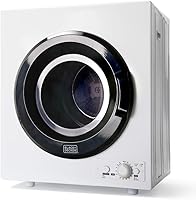
The BLACK+DECKER 2.65 cu ft Portable Dryer measures 23.6 x 17.1 x 27.5 in and uses a 3-prong plug for a standard 120V outlet. It has a 4 in vent hose, so make room for the hose and its connection.
This model is a possible fit if you have space for its footprint and a suitable exhaust route. Measure the room with the hose attached, and check the instructions for operating clearance.
Is a smaller portable dryer easier to place?
A smaller footprint can help with tight floor space, but you still need room for its door, airflow, and exhaust. Compare the full setup rather than the cabinet dimensions alone.
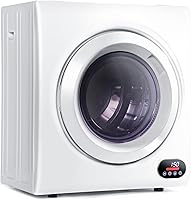
The Euhomy 1.8 cu ft Portable Dryer measures 18.9 x 15.8 x 22.17 in and is designed for a standard 120V outlet. It has a built-in exhaust duct and a multi-layer lint filter.
Consider this model if the larger dryer won't fit your available space. Confirm how its exhaust duct should be routed before setting it up.
The ROVSUN 1.5 cu ft Portable Dryer measures 19.5 x 16.5 x 24 in and weighs 37 lb. ROVSUN describes it as suitable for compact spaces such as apartments and dormitories.
This is another option to compare when floor space is limited. Check the manual for its exact power and vent setup, and leave enough room to operate it safely.
For more apartment-focused options and fit considerations, see our guide to best compact dryers for apartment living.
Can a portable dryer share space with a washer?
Yes, if the appliances fit safely and the dryer manufacturer permits the arrangement. Don't stack a dryer on a washer unless both manuals and any required support system allow it.
Leave access to the dryer door, lint filter, plug, and exhaust connection. A tight corner that hides the lint filter or crushes the hose can make everyday use harder.
If you're planning a vertical setup, read whether you can stack a portable dryer on a washer and check the support and clearance requirements before moving either appliance.
What apartment safety and care checks matter?
Use the dryer according to its manual, keep airflow clear, and clean its lint filter as directed. These steps support normal operation and help prevent lint from restricting airflow.
Place the dryer on a stable, level surface. Keep the exhaust hose unkinked, and don't cover the machine's air openings.
Clean the lint filter at the interval in the manual. Our guide to cleaning a portable dryer lint filter walks through the basic care task.
Avoid running the dryer in a place where water could reach its outlet or controls. If the plug, cord, outlet, or hose appears damaged, stop using the machine and contact the manufacturer or a qualified electrician as appropriate.
When is a portable dryer a poor apartment fit?
It may not work for your apartment if the building forbids it, you can't meet its outlet requirements, or there's no approved way to vent it. A machine that fits physically still needs a safe, permitted setup.
It may also be a poor choice if you need to dry large loads quickly but have room only for a small-capacity model. Compact dryers may require smaller loads and longer cycles than a full-size dryer.
If you can't vent a dryer or don't have permission to install one, consider a laundromat or air-drying where building rules allow. Don't buy a dryer first and hope to solve the setup later.
Can you have a portable dryer in an apartment?
Yes, when the dryer, apartment, and building rules all support the setup. Check permission, power, venting, and measurements before you choose a model.
Pick a smaller dryer if its dimensions suit your laundry area and its vent route works. If you want a broader comparison, start with portable dryers for home laundry, then verify the exact model requirements for your apartment.
Frequently asked questions
Can you use a portable dryer in an apartment without hookups?
Often, yes, if your building permits it and the dryer can use an available outlet and vent arrangement that meets its instructions. “No hookups” can mean no laundry connections, but it doesn't remove the need to manage exhaust.
Check your lease, outlet requirements, and vent path before buying.
Do portable dryers need to be vented?
Many portable dryers use an exhaust hose, so you need a safe route for warm, moist air. Follow the dryer manual and your building rules for venting; don't direct exhaust into a closed room or block the outlet.
Dryer designs differ, so confirm the setup for the model you choose.
Can you plug a portable dryer into a regular outlet?
Some compact dryers are designed for standard household outlets, but outlet needs vary by model. Check the voltage, plug, and circuit requirements in the manual, and avoid extension cords unless the manufacturer allows them.
Our guide to portable dryers and regular outlets explains what to check.
Where should a portable dryer go in an apartment?
Place it on a stable, level surface with the clearances and airflow its manual requires, near an approved outlet and a suitable exhaust route. Measure the machine, door swing, and path through your apartment before moving it.
Keep it away from wet areas and anything that could block its vents.