How Much Electricity Does a Portable Dryer Use?
A portable dryer’s electricity use depends on its wattage and run time. For example, an 850W dryer running for 1 hour uses about 0.85 kilowatt-hours (kWh); multiply that by your electricity rate to estimate the cost.
On this page (5 sections)
A portable dryer’s electricity use depends on its wattage and how long it runs. As a simple estimate, an 850W dryer running for 1 hour uses about 0.85 kilowatt-hours (kWh), before accounting for changes in power during a cycle.
To estimate your own cost, multiply the dryer’s wattage by its run time in hours, then divide by 1,000 to get kWh. Multiply that number by your electricity rate per kWh.
How much electricity does a portable dryer use per hour?
A dryer uses about 0.85 kWh per hour at 850W and about 1.4 kWh per hour at 1,400W if it draws that power for the full hour. These are estimates based on wattage, not a promise of the energy used in every cycle.
Use this formula:
Wattage × hours of use ÷ 1,000 = estimated kWh
For example, a 1,400W dryer running for 90 minutes would use about 2.1 kWh at a constant 1,400W draw: 1,400 × 1.5 ÷ 1,000. Actual use can vary if the dryer changes how it operates during a cycle.
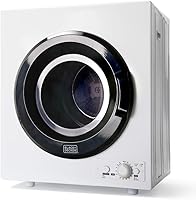
The BLACK+DECKER 2.65 cu ft Portable Dryer is rated at 1,400W and has a Sensor Dry function that measures moisture and adjusts heat. Its drying time can range from 30 to 200 minutes, so the time you select and the load both affect an estimate.
How do you estimate the cost per load?
Estimate the kWh for a cycle, then multiply by your electricity rate. Your bill or utility account can show the rate to use; rates vary by location and plan.
Suppose a dryer runs for 2 hours at 850W. That estimates to 1.7 kWh, so multiply 1.7 by your rate per kWh to estimate the electricity cost for that cycle.
Cycle time matters as much as the wattage in this calculation. If one dryer uses less power but runs longer, compare the estimated kWh over the full cycle rather than looking at watts alone.
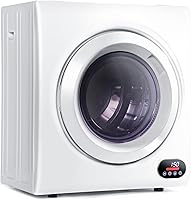
The Panda 1.5 cu ft Compact Dryer is rated at 850W, and its drying time can be set from 20 to 200 minutes. That range gives you a way to estimate energy for your own cycle length.
For another estimate, see our guide to how a portable dryer works, which explains the basic drying process and what can affect cycle length.
Does a portable dryer use a lot of electricity?
A portable dryer’s use can be modest per hour, but a long cycle adds up. Check the wattage and track how long your usual loads run to see what that means for your household.
A dryer’s energy use is not determined by its size alone. Load size, fabric, moisture left after washing, and selected setting can all affect how long drying takes.
The Feelfunn 850W Portable Dryer has an 850W rating and four automatic drying modes. Its maker recommends limiting wet loads to 10 lb for quicker drying, which can help keep cycle time in check.
If you’re deciding whether a portable unit fits your space and routine, read portable washers and dryers for small homes. For outlet questions, see whether portable dryers plug into a regular outlet.
How can you use less electricity when drying clothes?
Reduce avoidable drying time by starting with a smaller, well-spun load and choosing a suitable setting. Follow the dryer’s instructions and avoid overloading it.
Try these practical steps:
- Remove as much water as the washer’s spin cycle allows before transferring clothes.
- Dry similar fabrics together so lighter items don’t finish long before heavier ones.
- Avoid packing the drum tightly, which can limit airflow and extend drying.
- Clean the lint filter as directed so lint does not block airflow.
- Stop the cycle when clothes are dry rather than adding extra time by habit.
A portable dryer may need longer than a full-size unit, especially with bulky or heavy items. The best way to compare energy use is to estimate kWh across the entire cycle, not just compare each machine’s rated watts.
For more on keeping airflow clear, follow our guide to cleaning a portable dryer’s lint filter. If your dryer takes unusually long or stops heating, why a portable dryer may not heat can help you work through likely causes.
How much electricity should you expect from a portable dryer?
Use watts × hours ÷ 1,000 to estimate kWh, then multiply by your local electricity rate for a rough cost. A lower wattage can reduce energy per hour, while longer drying time can offset some of that difference.
Compare the BLACK+DECKER’s 1,400W rating with the Panda and Feelfunn models at 850W, and consider their cycle times and the loads you plan to dry. For a broader comparison of features and use cases, see our portable dryer guide.
For the closest estimate, track the actual run time of a typical load and use the dryer’s wattage in the formula. If you need a precise measurement, use a suitable energy monitor that is rated for the appliance and outlet.
Frequently asked questions
How much electricity does a portable dryer use per load?
Multiply the dryer’s wattage by the hours it runs, then divide by 1,000 to estimate kilowatt-hours (kWh). An 850W dryer running for 1 hour uses about 0.85 kWh.
Actual use per load depends on run time, load size, fabric, and the dryer’s settings.
Does a portable dryer use a lot of electricity?
It depends on how long you run it and how much power it draws. A lower wattage can mean less electricity per hour, but a longer cycle can narrow the difference.
Use the wattage and your typical run time to estimate energy for your laundry.
How can I estimate the cost to run a portable dryer?
Estimate kWh by multiplying watts by hours and dividing by 1,000. Then multiply kWh by your electricity rate.
For example, 850W for 1 hour is about 0.85 kWh, so the cost is 0.85 times your rate per kWh.
Does a portable dryer use less electricity than a regular dryer?
There isn’t one answer for every model or load. Compare each dryer’s wattage and the time it takes to dry a similar load; a lower wattage unit may need more time.
Check the appliance label and use your own cycle time for a closer estimate.